Archive
January 2018 History and Games Links
So many interesting things to investigate in this month’s links collections!
Historical Video Games
- Ancient Warfare – Looks to be perhaps a combination of block-building creation (a la Minecraft) with realtime strategy/third person battles. Clearly a sandbox of sorts and equally clearly, a sketchy status as a historical game. Ostensibly claims the ability to do WWI and WW2 battles, which undermines the whole title. Let me know if you play with this one.
- Assassin’s Creed: Origins’ first DLC: The Hidden Ones is out on January 23rd at Uplay
- Attentat 1942 – Attentat 1942 (my review) was recently named a 2018 competition finalist in the IGF (Independent Games Festival) competition. It is an engaging mystery game where you, playing as a modern Czech man or woman in Prague, investigate your grandfather’s involvement in the historical assassination of Nazi Governor and Holocaust Architect. Definitely a good candidate for play in classes studying civilian life in Nazi occupied Europe (Czechoslovakia), and an good genre game for anyone interested in the topic.
Numantia – Review
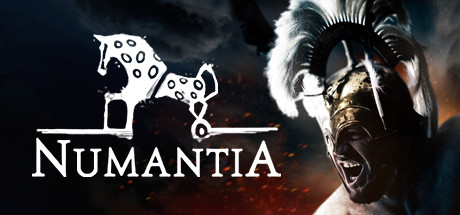 Numantia is a turn-based strategy game by RECOtechnology released for the PC, PS4, and XBox One. The game is set in the mid-second century BCE during the long, brutal wars the Romans fought in the Iberian peninsula as they conquered the region. Players can take the role of the Spanish or the Romans and play through a campaign that consists of a series of choice-based-text decisions on a stylized and attractive campaign map of northern Iberia punctuated by turn-based battles between Roman and Spanish forces on hex-based maps.
Read more…
Discussion: Historical Accuracy and Historical Video Games (Part 1)
For this first post in a series, Adam Chapman and I begin to discuss, and hopefully unravel, the ideas of historical accuracy and authenticity in historical video games. What do we mean by these terms? Can games show accuracy and authenticity? Does it matter and, if so, why? We have authored this as a dialogue, each of us contributing a little text at a time and responding off each other. We welcome participation and will respond to comments.
Jeremiah: It seems a straightforward sort of question: “how historically accurate is that video game?”, whether it’s Assassin’s Creed: Origins, Call of Duty: World War II, Sid Meier’s Civilization or any of the myriad historical video games. Sometimes when we talk about historical video games, we use the term historically authentic to try to capture something different about the ways a historical game relates to the past it depicts. Either way, it’s not an easy question. But let’s see if we can unpack it.
What does it mean to be historically accurate in general? Does that mean that a medium (text, recording, image, video, game, etc.) represents or depicts events in the correct chronology and “as they happened”? If so, we’ve got a problem right there. It’s been quite awhile since mainstream historians have argued that historians can in any meaningful sense depict the past “as it was.” But let’s leave that aside for a moment. Let’s stipulate that historically accurate means presenting accurately in the medium the “historical facts”, the “generally accepted” view of events, the participants, the order they happened, causes and effects, that sort of thing,
Mid-December History and Games Links
When I began the cycle I wasn’t sure if I’d have enough in a month. Amazing what pops up as we all work on history and games. Don’t forget to send links my way for the mid-January links page.
Historical Video Games
- Ambition: A Minuet in Power is currently on Kickstarter. According to its designers: “Court, snub and seduce your way to the top of society. Extend your influence, uncover the intrigue of the coming revolution, and ensure that you end up on the winning side of history.”
- Arté: Mecenas – Made for art history and world history classes, Arte: Mecenas places the player as a Medici banker developing business and patronizing Renaissance Art.
- Games by Colestia on itch.io – A set of small games about historical and real world topics. Post/Capitalism I found powerfully provocative and simple in its argument.
- Command: Shifting Sands – “Traces the history of many Arab-Israeli conflicts: from the sidelines of the Suez crisis, through the lightning Six-Day War… all the way to the historic Osirak raid and the epic air battle over the Bekaa Valley.”
- Curious Expedition – A game about 19th century European exploration and Imperialism. The designers have offered their game for free to interested educators (info@curious-expedition.com)
- Field of Glory II: Immortal Fire – The expansion to Field of Glory II focused on the Greco-Persian wars
- Oriental Empires – Turn-based strategy focused on ancient Chineses civilizations. As I noted in my tweet, I’m not fully comfortable with the title, but this seems to be a legitimate (and well-received) strategy game.
- Venti Mesi – “A collection of playable stories about Italian Resistance and Liberation from Nazi-Fascism.”
- Way of the Defector – Assume the role of a defector trying to escape North Korea and reach safety
Arté Mecenas – Review
Arté: Mecenas™ portrays the rise of the Medici and the interconnection of art, patronage, spirituality, economics, and politics in Renaissance Florence. Purposefully designed and marketed for students in art history surveys or general surveys of early Modern Europe, the game is accompanied with statements of learning objectives and a fair number of teacher support materials. These details help the game be integrated more smoothly into a teacher’s existing curriculum. The game also offers an instructor’s portal that enables the teacher to monitor students’ progress through the game.
The stated learning goals of Arté: Mecenas, are really more game goals rather than a list of the cognitive skills and knowledge the student will hopefully acquire and develop. Still they give a reasonable overview of the understandings the game designers hope students will acquire.
Read more…
Attentat 1942 – Review
With this post begins a regular practice of blogging at least monthly, in addition to the mid-month review of links. I’d like to fill this space with reviews of historical video games that have good prospects for use in history classes from middle school through college. With that in mind, it is my pleasure to begin with a review of Attentat 1942, (Steam Page).
Note: I received a review copy of Attentat 1942 at the developers’ initiative. I also played through the game once; clearly multiple playthroughs will bring different experiences
Attentat 1942, (Steam Page) is an intriguing historical adventure game developed by Charles University, Czech Academy of Sciences in Prague. The prologue, in full motion video footage from the Second World War, tells the player the story of the historical 1942 assassination of Reinhard  Heydrich, a primary actor driving the Holocaust and the Nazi governor of the protectorate of Moravia and Bohemia, the territory that included Prague after it came under Nazi control. The assassination of Heydrich by Czechoslovak paratroopers, while a blow on behalf of the resistance, resulted in the brutal execution and deportation to concentration camps of several thousand in the protectorate.
Mid-November History and Games Links
Starting with this post, I will post at least once every month a list of things new (to me at least) in the world of historical games – Games, Commentary, Scholarship, and even some more tangentially related news and scholarship. I’m not going to be too strict about when such material came out, so if you have things from earlier in the year that you would like to have posted in mid- December, let me know. I’ll figure out a better way to organize this, I hope, but for now, I just want to get the ball rolling
New Historical Video Games
I’m deliberately not including the AAA predominantly first/third person shooters; they get plenty of press already. These are the interesting indies with a marked preference for games that might be useful in a class-setting
- Attentat 1942 by Charles University, Czech Academy of Sciences Play and learn about the Nazi occupation of Czechoslovakia from video eyewitness testimony in the role of a modern young adult reconnecting with the past.
- Arms Race – The Cold War Era
- Civil War: Battle of Petersburg – A war game that looks to have been an mobile app first, but has reasonably positive Steam reviews
- Mare Nostrum– Mediterranean naval battles “from the dawn of history to the Roman Civil Wars”
- Numantia by Reco Technology A turn-based strategy game based on the second century BCE Spanish – Roman wars.
- Train Tycoon coming in January 2016 Preview Article by Samuel Horti, PC Gamer
- Empire Architect
- Bronze Age HD Edition
- Field of Glory II
Historical Twine Talk at VALUE Workshop
On September 5th, I had the pleasure of talking about Twine and history with attendees of the VALUE projects’ “Interactive Pasts Workshop: Interactive (Hi-)storytelling,” following my video presentation, Crafting Interactive Histories:
Twine and Choice-Based Interactive Historical Texts.
Link to the Video
Path of Honors Project
Writings
Chapman, A. (2016). Digital Games as History: How Videogames Represent the Past and Offer Access to Historical Practice. London: Routledge.
Dening, Greg, Performing cross-culturally,” Australasian Journal of American Studies, Vol. 25, No. 2 (December 2006), pp. 1-11
McCall, J. (2011). Gaming the Past: Using Video Games to Teach Secondary History. Routledge.
McCall, J. (2012). Navigating the Problem Space: The Medium of Simulation Games in the Teaching of History. The History Teacher 45 , 9-28.
McCall, J. (2012). Historical simulations as problem spaces: Criticism and classroom use. Journal of Digital Humanities 1.
Short, Emily — To many great essays to link to at her blog, but here are a few.
- https://emshort.blog/2010/06/07/so-do-we-need-this-parser-thing-anyway/
- https://emshort.blog/2014/10/29/writing-in-collaboration-with-the-system/
- https://emshort.blog/2015/05/24/framed-invisible-parties-and-the-world-plot-interface/
Interactive Texts
Jeremiah McCall (me) – Path of Honors Project
Rachel Ponce – Surviving History: The Fever
History Respawned Podcast with Me on Twine
In early August 2017, I had the pleasure of joining Bob Whitaker and John Harney on History Respawned, a podcast and sometimes YouTube video on history and games. We discussed Twine as a tool for history and in history education, and a number of other topics involving games and learning in history.
The Problem of Historical Choices in Twine Game Design – A Response to Neville Morley
Neville Morley (@NevilleMorley)and I (@gamingthpast)have been exploring the ramifications of Twine for developing interactive historical texts. My main ongoing experiment is the Path of Honors project, an interactive text about a fictional Roman aristocrat going through the very historical process of pursuing an aristocratic career. I call this sort of interactive text an “every person” approach in that it focuses on a historical situation but has a protagonist that did not exist, in an authentic set of circumstances. Neville is working on Might and Right, an investigation of the Athenian treatment of the polis of Melos in the Peloponnesian War. Neville’s text is what I would characterize as a “specific agent” approach, in that the player takes the role of Cleomedes, an Athenian general who was, in fact, in a command position at Melos in 416. A very quick bit of historical setup, quoted from Neville’s Twine:
The small island of Melos in the Cyclades, halfway between Athens and Crete, was originally a Spartan colony, and so had refused to join the Athenian alliance. Officially the Melians remain neutral, but in recent years their leaders have sided openly with Sparta. Now the Athenians have sent an expedition of 38 ships and 2,000 troops to demand the island’s unconditional surrender.
Neville has finished a version where the Athenian player, as Cleomedes, determines the fate of the Melians.
In a recent tweet I made a light-hearted, yet serious, attempt to propose a rule about historical game development in choice-based work that I jokingly titled, McCall’s Rule of Good Choices in a Historical Game: “The Designer must provide situations where there is more than one viable choice, and the historical choice cannot always be the only viable choice.”

GTP Designer Talks
Interviews with designers of historical video games. Posted here and on Spotify , Google Play, and Apple Podcasts.


 Gaming the Past